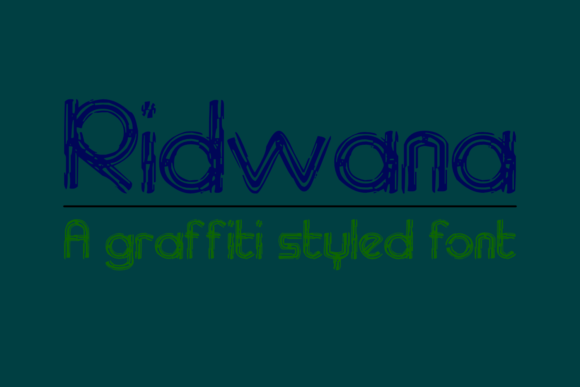
Ridwana Font Evaluation
The landscape of digital typography is vast, offering countless options for designers seeking to convey specific moods and narratives. Among the many display typefaces available, Ridwana has emerged as a distinct option for projects requiring an edgy, urban aesthetic. This font is characterized by its graffiti-inspired design, featuring multiple lines and varied strokes that mimic the look of street art. Before integrating this typeface into a creative workflow, it is essential to understand its structural properties, ideal use cases, and potential limitations.
Understanding the Ridwana Typeface
Ridwana is not a standard sans-serif or serif font designed for body text or long-form reading. Instead, it belongs to the category of display fonts, specifically those with a graffiti or street art influence. The visual identity of Ridwana is defined by its complexity; each letter is constructed from several intersecting lines and diverse strokes. This construction gives the characters a textured, layered appearance that closely resembles hand-painted murals or spray-painted tags found on city walls.
The unique stroke variation in Ridwana creates a sense of movement and energy. Unlike geometric sans-serifs which prioritize uniformity, Ridwana embraces irregularity. This characteristic makes it particularly effective when the goal is to capture a raw, unpolished, or rebellious atmosphere. The font's design language suggests spontaneity, making it a strong candidate for visual communication that aims to break away from corporate minimalism.
Strategic Applications for Street Art Typography
When evaluating whether to select Ridwana for a project, one must consider the context in which the text will appear. Its primary strength lies in its ability to command attention through high-contrast visual interest. Designers often turn to this typeface for headlines, logos, and poster designs where immediate impact is required.
- Event Promotion: For concerts, festivals, or club nights that feature urban music genres such as hip-hop, rap, or punk, Ridwana provides an authentic visual cue that resonates with the target audience.
- Brand Identity: Brands targeting youth culture, skateboarding communities, or streetwear markets may utilize this font to establish a connection with subcultures that value authenticity and rebellion.
- Editorial Headlines: In magazines or online articles discussing urban life, architecture, or social movements, Ridwana can serve as a powerful pull-quote or section header to set the tone.
- Merchandise Design: T-shirts, stickers, and posters benefit from the bold, graphic nature of the letters, which remain legible even at smaller sizes or when printed on textured materials.
Benefits of the Graffiti Style
The decision to use Ridwana offers several tangible benefits for creative projects. First, the font's distinctive character reduces the likelihood of generic design outcomes. Because the letterforms are so stylized, they naturally differentiate a project from competitors who may be using more conventional typefaces. This differentiation can enhance brand recall.
Secondly, the "rural street art vibe" mentioned in the font's description adds a layer of narrative depth. It evokes feelings of creativity, freedom, and grassroots expression. When a designer needs to communicate these abstract concepts without relying heavily on imagery, the typography itself can carry the emotional weight of the message. The multiple lines within each character create a sense of density and richness that flat, single-stroke fonts lack.
Tradeoffs and Practical Considerations
While Ridwana excels in specific scenarios, it is not a universal solution. Understanding the tradeoffs is crucial for making an informed selection. The most significant limitation is readability. Due to the complex internal structures and varying strokes, Ridwana is generally unsuitable for body copy, navigation menus, or any text block exceeding a few words. Using it for extended reading would likely cause eye strain and reduce comprehension.
Another consideration is legibility across different mediums. While the font looks striking in large formats like billboards or web banners, scaling it down for mobile interfaces or small print applications may result in a loss of detail. The intricate lines might merge together, creating a muddy appearance rather than a crisp one. Additionally, the stylistic choices inherent in graffiti fonts can sometimes clash with formal or professional branding guidelines. If a client requires a clean, trustworthy, and neutral image, Ridwana might introduce unintended associations of chaos or informality.
Situations Where Alternatives May Be Preferable
There are clear situations where other typefaces would be more appropriate than Ridwana. For projects requiring a modern, sleek, and highly readable interface, a geometric sans-serif or a humanist sans-serif would be a better choice. These fonts prioritize clarity and neutrality over stylistic flair.
If the goal is to evoke a vintage or retro feel without the aggressive edge of street art, a slab serif or a classic script font might offer a more refined aesthetic. Furthermore, for international audiences where the cultural context of Western graffiti is not immediately understood, a more neutral typeface ensures that the message remains accessible without relying on specific cultural signifiers. In legal documents, financial reports, or educational materials, the priority is absolute clarity, making a display font like Ridwana inappropriate regardless of its artistic merit.
Making the Final Decision
Selecting the right font ultimately depends on aligning the visual style with the project's core objectives. To determine if Ridwana aligns with your needs, ask yourself the following questions: Does the project require a loud, energetic voice? Is the target audience familiar with and appreciative of street culture? Will the text be used primarily for headlines or decorative purposes?
If the answer to these questions is affirmative, Ridwana is a strong contender. It offers a unique visual signature that can elevate a design from ordinary to memorable. However, if the project demands subtlety, broad accessibility, or formal professionalism, it is advisable to explore alternative options that better suit those constraints. By carefully weighing the benefits against the limitations, designers can ensure that their typographic choices effectively support their content rather than distracting from it.
In conclusion, Ridwana serves as a specialized tool in the designer's arsenal. Its charm and uniqueness make it perfect for adding a rural street art vibe to creative projects where standing out is the primary goal. However, its effectiveness is contingent upon strategic application. When used correctly, it transforms simple text into a visual statement; when misused, it risks obscuring the message entirely.