Bad Hawk: Bold Typography for Impactful Design
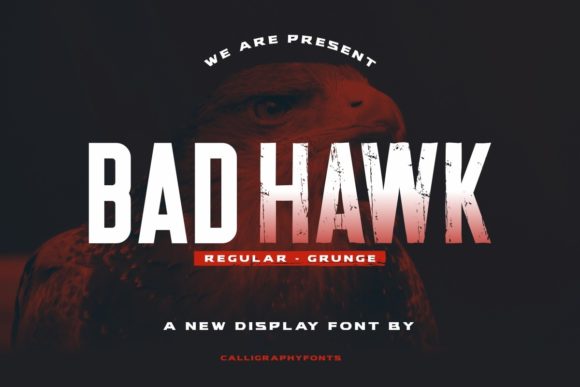
In a digital landscape saturated with soft, rounded sans-serifs and delicate script fonts, there is a distinct need for something that cuts through the noise. Bad Hawk arrives not as a whisper, but as a statement. It is a display font defined by its cool, bold, and assertive character, designed specifically for moments when your design needs to demand attention immediately. Whether you are crafting a magazine cover, designing product labels, or creating posters for a high-energy event, this typeface offers the visual weight required to anchor your message.
The name itself suggests agility and sharpness. Unlike traditional serif fonts that convey heritage or standard sans-serifs that prioritize neutrality, Bad Hawk occupies a unique space in the typographic hierarchy. It is engineered to be seen from a distance and read instantly. Its geometric yet slightly aggressive structure makes it an ideal tool for creators who want their work to feel modern, edgy, and undeniably professional without sacrificing readability.
Understanding the Power of Assertive Type
Typography is rarely just about selecting letters; it is about setting the emotional tone of a project before a single word is read. When you choose a font like Bad Hawk, you are signaling confidence. The "bad" in the name does not imply poor quality; rather, it implies a rebellious spirit. It breaks the rules of conventional subtlety to deliver a punchline in visual form. This makes it particularly useful for brands or individuals who want to position themselves as disruptors or innovators.
For designers, working with such a strong font requires a shift in strategy. You cannot simply dump text onto a canvas and expect it to look good. Because Bad Hawk is so dominant, every element surrounding it must be carefully curated. White space becomes your best friend here. By allowing the bold strokes of the letters to breathe, you enhance their impact. If you crowd the text, the assertiveness turns into clutter. If you give it room, it transforms into art.
This font works exceptionally well when paired with minimal imagery. A photograph with heavy contrast or a solid, vibrant background color allows the typography to sing. The interplay between the sharp angles of the letters and the organic shapes of a photo creates a dynamic tension that keeps the viewer engaged. It is a balance of power and precision that defines high-end graphic design.
Where Bad Hawk Shines: Practical Applications
The versatility of a display font often lies in its ability to adapt to various mediums while maintaining its core identity. Here are several specific contexts where Bad Hawk can elevate your projects:
- Magazine Covers: The headline is the most critical element of any publication. Bad Hawk provides the necessary volume to compete on a newsstand or a social media feed. Its bold weight ensures that the main story stands out against complex layouts and colorful photography.
- Product Labels: In a crowded retail environment, packaging must communicate value instantly. Using Bad Hawk for brand names or key product features adds a sense of premium quality and boldness. It suggests that the contents inside are robust and reliable.
- Event Posters: Concerts, festivals, and workshops require immediate energy. The assertive nature of this font mirrors the excitement of live events. It captures the eye of passersby and conveys a sense of urgency and exclusivity.
- Digital Headers: For blogs, landing pages, or app interfaces, Bad Hawk serves as an excellent hero font. It guides the user's eye to the most important information, reducing cognitive load by making the primary message unmistakable.
Adapting the Style for Different Audiences
While Bad Hawk has a fixed personality, its application can be tailored to suit different goals and audiences. A creative director might use it differently than a small business owner, and understanding these nuances is key to effective design.
For marketers and entrepreneurs, the font is a tool for conversion. When used in email subject lines or call-to-action buttons, the boldness increases click-through rates by implying importance. However, it should be used sparingly. Overusing an assertive font can make a brand appear shouting or aggressive. Instead, reserve it for headlines and key data points, pairing it with a more neutral body font to maintain balance.
Educators and publishers can utilize Bad Hawk to break the monotony of educational materials. Textbooks and course handouts often suffer from being visually dull. Injecting Bad Hawk into chapter titles or sidebar quotes can re-engage students, making the content feel more relevant and exciting. It signals that the material is fresh and thought-provoking.
Hobbyists and freelancers often struggle with finding a style that feels personal yet professional. Bad Hawk offers a way to inject personality into portfolios and freelance proposals. It shows that you have a distinct point of view and aren't afraid to take risks. This can be particularly effective for designers, photographers, and artists looking to differentiate themselves in a competitive market.
Maintaining Clarity and Consistency
One of the biggest challenges when working with a bold, distinctive font is ensuring that the final result remains clear and organized. The risk is always that the design becomes too loud, overwhelming the actual message. To avoid this, focus on hierarchy. Use Bad Hawk for the primary message, but ensure secondary information is legible and subordinate.
Consistency is also vital. If you introduce Bad Hawk into a brand identity, apply it consistently across all touchpoints. Whether it is on a business card, a website banner, or a social media graphic, the font should carry the same weight and presence. This builds recognition and trust with your audience. Inconsistency dilutes the impact of the font and confuses the viewer.
When adapting Bad Hawk for different platforms, consider the medium. On a large poster, you can get away with intricate details and tight kerning. On a mobile screen, simplicity is king. You may need to adjust the size or spacing to ensure the letters remain readable at smaller dimensions. The goal is to preserve the "cool" factor without sacrificing accessibility.
Unleashing Creative Possibilities
Beyond standard usage, Bad Hawk invites experimentation. Its unique structure allows for creative interpretations that can set your work apart. Try layering the text over textured backgrounds to add depth. Experiment with color gradients that follow the contours of the letters, or use negative space within the characters to hide subtle imagery.
For those looking to create variations, consider mixing Bad Hawk with contrasting styles. Pairing its hard edges with a flowing script font can create a striking juxtaposition of toughness and elegance. This combination is powerful for fashion brands or luxury goods where you want to convey both strength and sophistication.
Ultimately, the success of using Bad Hawk depends on your intent. Are you trying to inform, persuade, or inspire? This font is best suited for persuasion and inspiration. It commands respect and demands action. By understanding its strengths and limitations, you can harness its power to create designs that are not only visually stunning but also strategically effective. Whether you are a seasoned pro or just starting out, Bad Hawk offers a reliable foundation for building bold, memorable visual identities.